Your employees' Ber months costs, explained

Ask a Filipino employee when Christmas starts and there's a good chance they'll say September. The holiday playlists begin and decorations start appearing in malls. But behind the festive mood, something else kicks off: budgeting season.
For many employees, the Ber months mean several months of planning and spending before Christmas even arrives. More and more, many households are starting the season while still feeling the effects of higher prices on everyday essentials.

The season starts with tighter budgets
According to the Philippine Statistics Authority, inflation stood at 6.1% in August 2026. Rice and transport remain the heaviest at 19.4% and 13.5%. These are costs employees cannot easily cut. They cover what families eat and how workers get to the office.
This is why Christmas planning often starts earlier than people expect. Gifts are bought gradually. Trips going back home to the provinces are booked in advance. Families spread costs across several months instead of paying for everything in December.
What the Ber months actually cost
The season is rarely one large December expense. It’s a series of smaller ones spread across four months—all of which sits on top of costs employees are already managing.
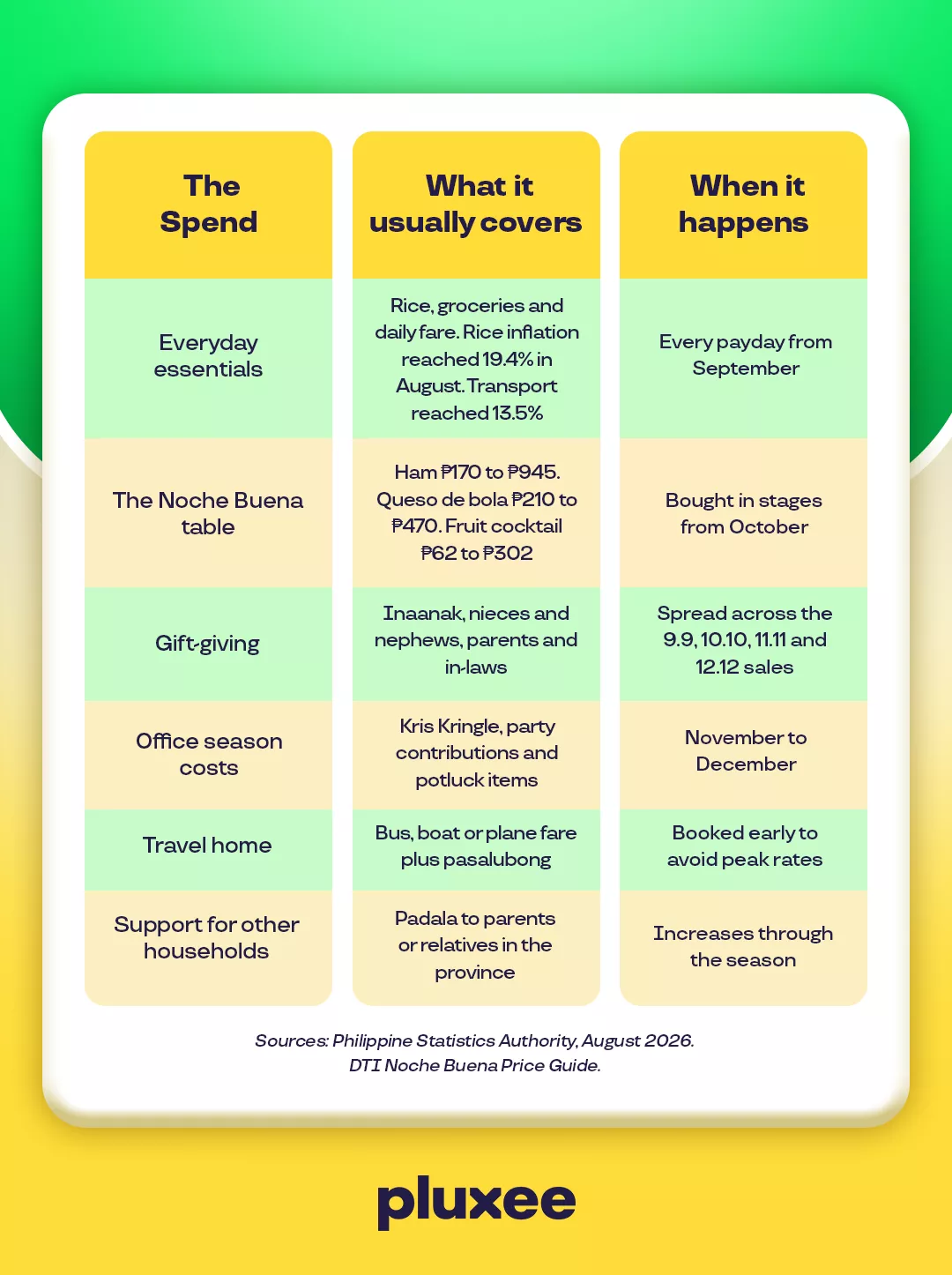
Gift costs work differently from the rest. They scale with family size rather than salary. An employee with several inaanaks faces a very different December than a colleague earning the same amount with none. Employers tend to underestimate this expense because it’s invisible from the outside and rarely discussed at work.

The pressure goes beyond money
Not every cost of the season appears on a receipt.
The 2025 TomTom Traffic Index found that drivers in Manila lost around 143 hours a year in rush-hour traffic. The MMDA has acknowledged that congestion typically worsens during the holidays. Those extra minutes come out of rest and family time rather than working hours.
Weekends change shape too. Errands take longer as queues get busier. Rest days fill up with shopping and family commitments. There is also the quieter work of deciding who receives a gift and what fits the budget. Many employees are managing all of this while year-end responsibilities are at their heaviest.

Why employers should pay attention
Financial pressure doesn’t just stay at home. When employees are worried about expenses, it can be harder to stay focused and fully engaged at work.
Case in point, Jobstreet by SEEK's Salary Pulse Philippines 2026 report found that 45% of employed Filipinos feel their salary falls short of their needs. As holiday spending increases, many workers are managing financial pressure at the same time businesses are entering one of their busiest periods of the year.

Support given earlier makes a difference
Most employees receive their 13th month pay close to Christmas. By then, many holiday expenses have already been planned or paid for using their regular salary.
That is why support provided earlier in the season can have a bigger impact. Employees have different priorities. One person may need help with groceries while another may be saving for a trip home. Someone else may simply need more room for their monthly budget.
With Pluxee Gifts, companies can provide a digital benefit that employees can use across a wide partner merchant network based on their own needs and preferences. It gives employees more flexibility while making distribution easier for employers.
Sometimes the most helpful holiday benefit is not the biggest one. It's the one that arrives earliest.
Ready to support your employees before the holiday rush?
this article on social media


Related articles