Why human judgment matters more than ever in the age of AI

When artificial intelligence (AI) first entered the workplace, many feared it would replace people.
Today, a different concern is emerging. People aren't being replaced by AI. They're becoming overly reliant on it.
Every day, employees use AI to write emails, summarize meetings, develop presentations, analyze data, and generate content. What once took hours can now be done in minutes. In many ways, that's a good thing. AI has become a powerful productivity tool that helps employees spend less time on repetitive tasks and more time on strategic work.
But as AI adoption grows, so does the temptation to treat AI-generated outputs as finished work rather than starting points.
That's where problems begin.

The AI slop
The issue isn't that AI makes mistakes. Humans do, too. The issue is that AI can produce answers that look polished, professional, and convincing—even when they're incomplete, inaccurate, or lacking context. When people stop questioning what AI produces simply because it sounds credible, organizations risk creating work that is technically correct on the surface but ultimately lacks substance, originality, or sound judgment.
This is what many people are now describing as "AI slop": content that is produced quickly, consumed quickly, and accepted without enough human thought.
In a workplace increasingly powered by automation, avoiding AI slop may become one of the most important skills employees can develop.

Human judgment as the competitive advantage
There's a common assumption that AI will reduce the importance of human skills.
In reality, it may be the exact opposite.
As AI makes it easier to generate information, ideas, and content, the ability to evaluate those outputs becomes even more valuable. Knowing whether something is accurate, relevant, ethical, or useful requires critical thinking that AI simply cannot provide on its own.
The organizations that will benefit most from AI won't necessarily be those with access to the best tools. They'll be the ones that train employees to have keen eyes and strong judgment.

AI literacy is the key
That's why successful AI adoption should not focus exclusively on technology.
Too often, companies invest in new tools without investing equally in the people expected to use them. Employees are given access to AI platforms but receive little guidance on how to write effective prompts, verify information, identify bias, or recognize misleading outputs.
The result is predictable: faster work, but not necessarily better work.
To make AI genuinely valuable, businesses need to teach employees how to work with it thoughtfully. That includes understanding how to provide context instead of vague instructions, how to refine prompts to improve results, how to fact-check information, and how to recognize when human expertise should override an AI recommendation.
In other words, AI literacy is becoming just as important as digital literacy.
The goal is not to create employees who depend on AI. It's to create employees who know how to use AI without becoming dependent on it.

Why authenticity matters
There's another reason human judgment remains essential: people can still tell when something feels human and when it doesn't.
Customers recognize generic messaging. Employees can sense when communication feel impersonal. Audiences notice when content says all the right things but lacks a genuine point of view.
AI can help create content, but what it struggles to create is authenticity.
Real authenticity comes from experience. It comes from understanding an audience's concerns, reading the emotional context of a situation, and knowing when to deviate from what sounds technically correct to what feels genuinely meaningful.
Those are uniquely human capabilities. This means that as AI-generated content becomes more common, authenticity may become an even stronger differentiator than it is today.
Ironically, the more work is automated, the more people will value evidence of human thought.
Investing in AI readiness
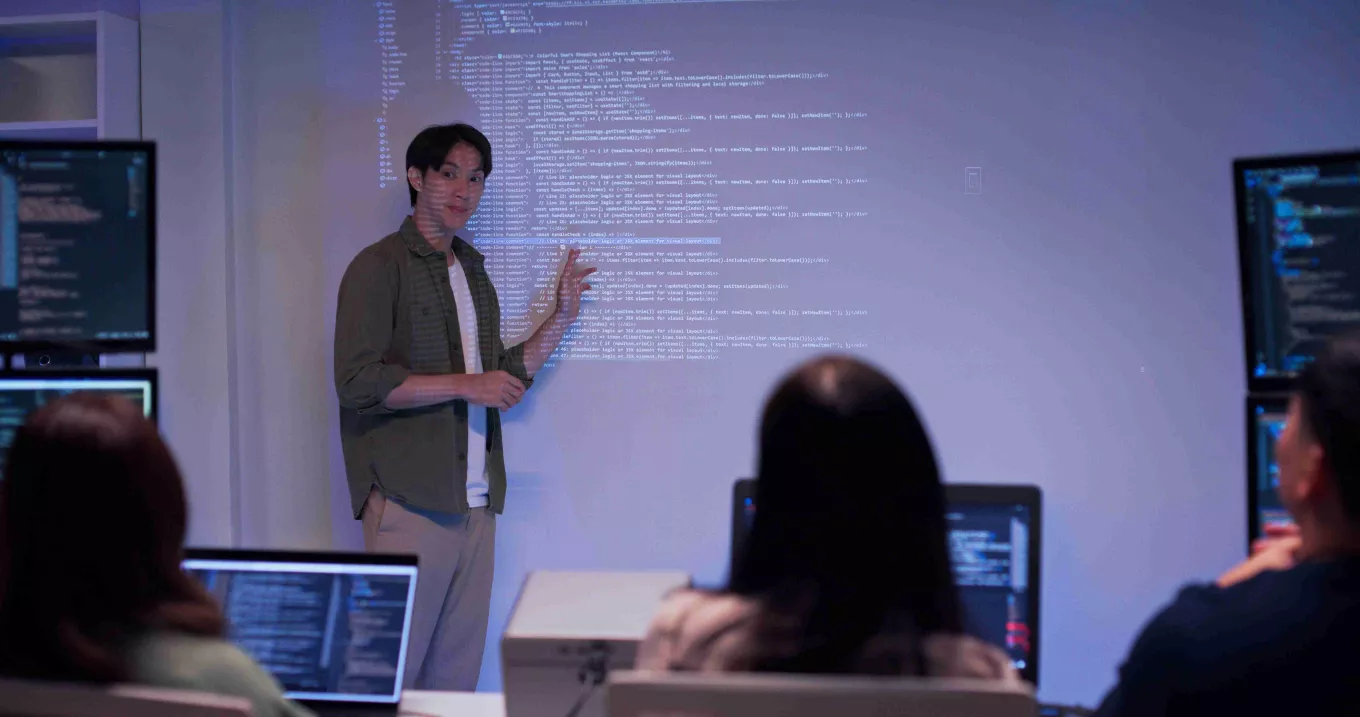
If businesses want to maximize the benefits of AI while avoiding the pitfalls of AI slop, they need to invest in continuous learning.
That means providing employees with opportunities to strengthen digital skills, improve AI literacy, and develop critical thinking skills that help them use technology responsibly. It also means recognizing and rewarding employees who embrace learning and innovation.
This is where employee benefits and rewards can play a meaningful role.
Organizations can encourage participation in AI workshops, digital upskilling programs, and innovation initiatives by offering incentives that support both learning and everyday well-being.
With Pluxee Gifts, companies can provide gadget and technology allowances that employees can use at merchants such as Beyond the Box, Digital Walker, Power Mac Center, Octagon, Silicon Valley, and Asianic—helping them build the digital toolkit they need to thrive in a modern workplace.
Meanwhile, meal benefits redeemable at Jollibee, Chowking, Greenwich, Sichu Malatang, Max's Restaurant, Pancake House, 8Cuts, Din Tai Fung, Café France, and Domino's Pizza can help keep teams energized during training sessions, workshops, and collaborative learning activities.
Because preparing employees for the future of work isn't just about giving them access to technology. It's about giving them support, resources, and motivation to use it well.
Final thoughts
For years, the conversation around AI has focused on what technology can do. Perhaps the more important question is what people should continue doing.
AI can generate answers, but it cannot replace judgment. It can accelerate work, but it cannot determine what truly matters. It can help create content, but it cannot fully replicate human perspective, empathy, or experience.
The future of work will not belong to organizations that automate everything. It will belong to organizations that know where automation adds value and where human thinking remains irreplaceable.
In a world where anyone can generate content in seconds, the real differentiator will no longer be the ability to create more.
It will be the ability to think better.
Get out of the AI slop. Book a free consultation today.